
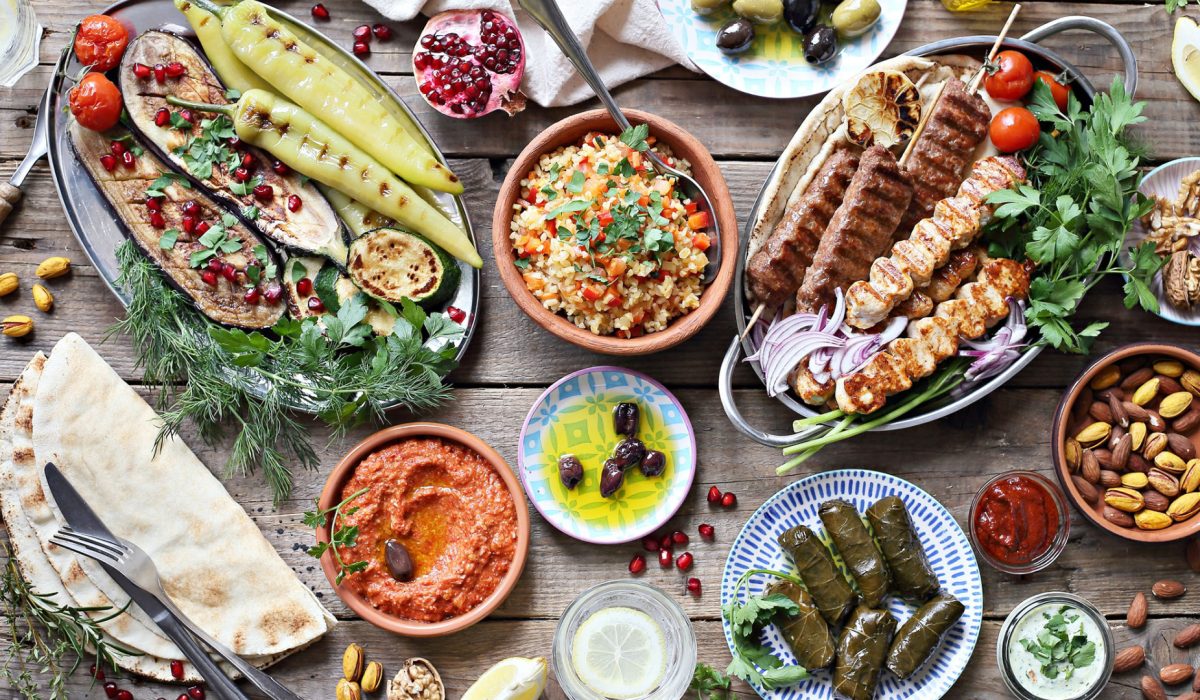
A Sea That Unites Through Taste
The Mediterranean is more than a sea; it is a cradle of civilizations, a meeting place of cultures, and above all, a mosaic of flavours that have shaped the world’s understanding of food. From the olive groves of Greece to the spice-scented markets of Morocco, the Mediterranean basin has given rise to one of humanity’s most celebrated culinary traditions. Here, food is not merely sustenance—it is identity, memory, and ritual. The Mediterranean diet has been praised for its health benefits, but beyond the science lies a deeper truth: this cuisine reflects a way of life, one where nature, community, and simplicity blend harmoniously.
To understand the Mediterranean’s culinary soul is to embark on a journey that crosses continents, languages, and histories—a journey where flavour becomes the common language of the sea.

The Origins of a Timeless Table
The roots of Mediterranean cuisine stretch back thousands of years. Ancient civilizations that bordered this sea—Egyptians, Greeks, Romans, Phoenicians, and later Arabs and Ottomans—each left their imprint on what we now call Mediterranean cooking. Trade routes carried more than gold and textiles; they transported olives, wine, wheat, and spices, forming the foundation of a shared culinary identity.
In ancient Greece, olive oil was considered liquid gold, used not only in cooking but also in religious ceremonies and medicine. The Romans later spread the cultivation of vines and olives throughout their empire, laying the groundwork for Europe’s wine and olive industries. Meanwhile, Arab traders introduced citrus fruits, rice, and spices such as saffron and cinnamon to southern Europe, transforming local cuisines forever.
This fusion of ingredients and influences created a remarkable culinary ecosystem where geography dictated both necessity and creativity. Coastal regions relied on seafood and fresh vegetables, while inland areas developed hearty stews, grains, and preserved foods. Yet, despite their differences, the underlying philosophy remained the same: balance, freshness, and respect for ingredients.
Olive Oil: The Golden Thread
If there is one ingredient that defines the Mediterranean, it is olive oil. Pressed from fruit that thrives in sun-soaked soils and dry winds, olive oil represents the essence of the region’s landscape. Its uses are nearly endless—it enriches salads, stews, and bread; it drizzles over grilled fish; it becomes a dip for simple, rustic meals.
The act of producing olive oil itself is almost sacred. In small villages across Italy, Greece, and Spain, families still gather for the olive harvest, passing down methods that have changed little since antiquity. The oil’s quality reflects the land’s character—Greek oils often have a peppery bite, while Spanish varieties may be fruity and golden.
But beyond taste, olive oil carries symbolic weight. It embodies the Mediterranean’s emphasis on purity, patience, and connection to the earth. To cook with olive oil is to join a lineage of people who understand that great food begins not in the kitchen, but in the soil.
Bread, Wine, and Togetherness
Bread and wine, together with olive oil, form what could be called the “Mediterranean trinity.” In every culture surrounding the sea, bread is a daily ritual. Whether it is the crusty baguette of France, the soft pita of the Levant, or the rustic focaccia of Italy, bread is more than nourishment—it is a symbol of life itself. Breaking bread with others is a gesture of unity, of peace, of belonging.
Wine, too, carries both pleasure and philosophy. The ancients drank it as part of religious rituals, while modern Mediterranean societies treat it as an accompaniment to conversation and connection. A glass of red shared at sunset by the sea, paired with olives and cheese, captures the spirit of a region that values slow living and simple joys.
The Mediterranean Palette: Colours, Aromas, and Seasons
Walk through a Mediterranean market, and you are enveloped in a symphony of colours and aromas: tomatoes ripened under endless sunshine, gleaming purple eggplants, glistening fish laid over crushed ice, baskets of figs, and pyramids of lemons. Each ingredient tells the story of the region’s climate—abundant sunshine, fertile soil, and a deep respect for seasonal cycles.
The cuisine is guided by nature’s calendar. In spring, artichokes, peas, and asparagus appear on tables. Summer brings tomatoes, cucumbers, and peppers—ingredients for the famous Greek salad or Spanish gazpacho. Autumn fills kitchens with grapes, mushrooms, and olives, while winter calls for lentils, beans, and preserved meats.
The Regional Harmonies
The Mediterranean diet is often spoken of as a single entity, but in truth, it is a family of cuisines united by philosophy rather than uniformity.
In Italy, each region is a world of its own—northern pastas enriched with butter and cheese contrast with the olive oil and seafood of the south. Dishes like caprese salad or spaghetti alle vongole showcase the elegance of minimalism: few ingredients, perfect harmony.
Greek cuisine thrives on ancient traditions, combining tangy feta cheese, olives, herbs, and grilled meats. A plate of moussaka or dolmades speaks of a culture that prizes balance between land and sea.
Across the sea, Moroccan and Tunisian tables burst with spice. Cumin, coriander, and saffron infuse tagines with warmth, while preserved lemons and olives add brightness. Couscous, steamed to perfection, serves as both a humble base and a canvas for flavour.
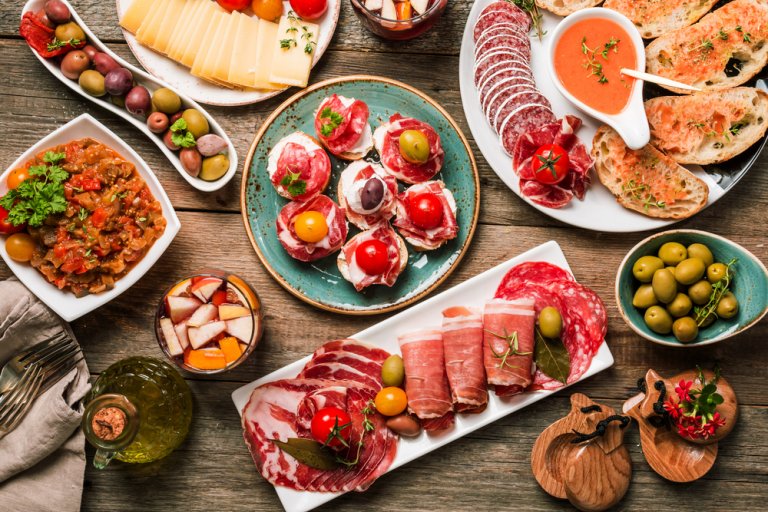
In Spain, food is a celebration of both land and community. Tapas encourage sharing; paella captures the bounty of the coast and countryside in one dish. Meanwhile, France’s Provence region mirrors its Mediterranean neighbours with its own sun-drenched ingredients—ratatouille, bouillabaisse, and aioli each express the beauty of southern simplicity.
The Health of Body and Spirit
When scientists studied Mediterranean populations in the mid-20th century, they discovered something remarkable: despite diets rich in fats, people in regions like Crete and southern Italy had lower rates of heart disease and longer life expectancy. The secret lay not in restriction but in balance. Olive oil replaced animal fats, meals were plant-forward, and red meat was eaten sparingly.
But the health of the Mediterranean diet goes beyond nutrition. It reflects a holistic philosophy—eating as part of community, valuing time at the table, and cultivating gratitude for food. Meals are rarely eaten alone, and moderation is as much about joy as it is about restraint.
Flavour as Identity
In the Mediterranean, flavour is deeply tied to place. Each region’s dishes are inseparable from its geography and history. The saltiness of anchovies mirrors the sea; the sweetness of Sicilian oranges reflects volcanic soil; the smoky paprika of Spain recalls centuries of Moorish influence.
Food also acts as a form of storytelling. Recipes are family heirlooms, passed down like sacred texts. A grandmother’s stew or fisherman’s soup may vary from one village to the next, yet each carries the same heartbeat of authenticity. This devotion to tradition does not exclude innovation—modern chefs reinterpret classics, combining local ingredients with contemporary techniques—but always with reverence for their roots.
The Spirit of Hospitality
One cannot understand Mediterranean food without understanding Mediterranean hospitality. Whether in a Greek island home, a Moroccan riad, or a Sicilian village, guests are treated as blessings. Meals begin with offerings—olives, bread, wine, or tea—served with warmth and generosity.
This sense of welcome is not mere custom; it reflects a worldview rooted in community and compassion. To share food is to share life. Even the simplest dish, when given freely, becomes an act of connection. It is this generosity of spirit that transforms the Mediterranean from a geographic region into a shared human experience.
A Living Heritage
UNESCO has recognized the Mediterranean diet as an Intangible Cultural Heritage of Humanity, not only for its health value but for its cultural richness. It represents a model of sustainable living—a dialogue between humans and nature. Farmers still cultivate olives, grapes, and grains in ways that respect the land’s rhythm; fishermen adhere to age-old practices that protect marine life.
As the world grows more industrialized and fast-paced, the Mediterranean’s example feels increasingly vital. It reminds us that to eat well is not just to consume, but to connect—with our planet, our history, and each other.

Conclusion: The Taste of Timelessness
To step into the Mediterranean culinary world is to taste time itself. Every meal tells a story of migrations and meetings, of empires and ordinary lives shaped by the sea’s constant presence. Yet what endures across millennia is the simple joy of good food shared among people who understand that flavour is not found in excess, but in harmony.
The Mediterranean is indeed a land of flavour, but more than that—it is a philosophy of living well. It invites us to slow down, to savour, to celebrate. In every drizzle of olive oil, in every loaf of bread, and in every sip of wine, we find a quiet wisdom that has nourished civilizations and continues to feed the human spirit.
